


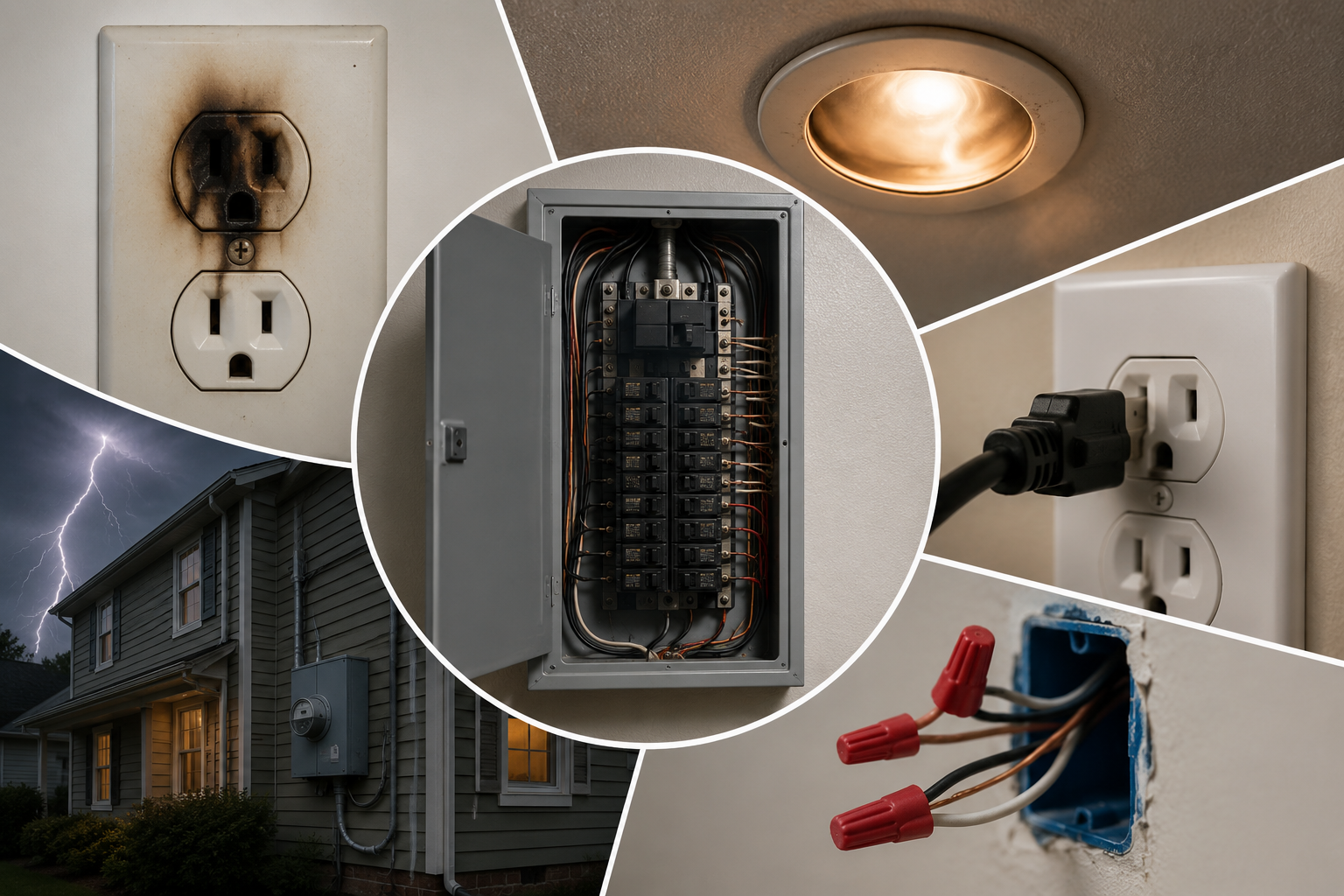
Electricity powers nearly every aspect of modern living. From lighting and kitchen appliances to HVAC systems, home offices, and electric vehicle chargers, homeowners depend on a safe and reliable electrical system every day. Because these systems work quietly in the background, it’s easy to overlook small warning signs until they develop into expensive repairs or serious safety hazards.
Many homeowners in Tolland, CT experience electrical issues that seem minor at first flickering lights, outlets that stop working, or circuit breakers that trip occasionally. While these problems may appear harmless, they often indicate underlying issues within your home’s electrical system that should be addressed by a licensed electrician.
Ignoring electrical problems can lead to damaged appliances, higher energy bills, inconvenient power outages, and in some cases, electrical fires. According to the U.S. Fire Administration, electrical malfunctions remain one of the leading causes of residential fires, making routine inspections and timely repairs an important part of protecting your home and family.
At CODAN Electric LLC, we help homeowners throughout Tolland, CT diagnose, repair, and prevent a wide range of residential electrical problems. Whether it’s upgrading an outdated electrical panel, replacing damaged wiring, installing surge protection, or troubleshooting recurring issues, our experienced electricians provide safe, code-compliant solutions designed for long-term reliability.
In this guide, we’ll explore some of the most common electrical problems homeowners face, explain what causes them, discuss the risks of ignoring them, and share practical solutions to help keep your home’s electrical system operating safely and efficiently.
Why Electrical Problems Should Never Be Ignored
Electrical systems naturally experience wear over time. As your home ages and your family’s power demands increase, components such as wiring, outlets, breakers, and electrical panels are placed under greater stress than they were originally designed to handle.
Years ago, most homes only needed enough electricity for basic lighting, a refrigerator, and a few household appliances. Today, the average home may also include multiple televisions, gaming systems, computers, smart home devices, electric water heaters, high-efficiency HVAC systems, security systems, and even electric vehicle chargers. This increase in electrical demand can expose weaknesses in older systems that were never built for today’s energy usage.
Unfortunately, many homeowners assume electrical issues are simply part of owning an older house. They may reset a tripped breaker, ignore flickering lights, or continue using outlets that occasionally stop working without realizing these are warning signs of larger problems.
Ignoring these issues can result in:
- Increased risk of electrical fires
- Damage to expensive electronics and appliances
- Frequent power interruptions
- Higher electricity consumption
- Unexpected repair costs
- Reduced home safety
- Potential electrical code violations
Addressing problems early is almost always more affordable than waiting until a major failure occurs. A professional inspection can identify hidden issues before they become emergencies, giving homeowners peace of mind and helping avoid costly repairs in the future.
1. Frequently Tripping Circuit Breakers
One of the most common reasons homeowners contact an electrician is because their circuit breaker keeps tripping.
Circuit breakers are designed to protect your home’s electrical system. When a circuit becomes overloaded or detects a fault, the breaker automatically shuts off power to prevent overheating and reduce the risk of electrical fires.
While an occasional trip isn’t unusual, breakers that trip repeatedly should never be ignored.
Common Causes
Several issues can cause circuit breakers to trip, including:
- Too many appliances running on one circuit
- Short circuits
- Ground faults
- Faulty appliances
- Aging electrical panels
- Damaged wiring
- Loose electrical connections
In many older homes throughout Tolland, electrical systems were installed decades ago when household energy consumption was much lower. Modern appliances and electronics can place far greater demands on these systems, causing breakers to trip more frequently.
Warning Signs
Watch for symptoms such as:
- Breakers tripping several times each month
- Power shutting off when using multiple appliances
- Breakers that won’t reset
- Buzzing sounds near the electrical panel
- Burning odors around the breaker box
- Lights dimming before power shuts off
These warning signs often indicate that the problem extends beyond a simple overloaded circuit.
Professional Solutions
A licensed electrician can determine the exact cause by inspecting your electrical system and performing load calculations.
Depending on the issue, solutions may include:
- Redistributing electrical loads
- Installing dedicated circuits
- Replacing damaged breakers
- Repairing faulty wiring
- Upgrading the electrical panel
- Replacing aging electrical components
Rather than repeatedly resetting breakers, homeowners should identify and correct the root cause to ensure safe, reliable operation.
2. Flickering or Dimming Lights
Flickering lights are another common complaint among homeowners. While occasional flickering may simply be caused by a loose light bulb, persistent or widespread flickering often points to an electrical issue that deserves professional attention.
If lights dim every time your air conditioner starts, your microwave runs, or another large appliance turns on, your electrical system may be struggling to handle the load.
Possible Causes
Several electrical problems can lead to flickering or dimming lights, including:
- Loose electrical connections
- Failing light switches
- Worn outlets
- Voltage fluctuations
- Overloaded circuits
- Aging electrical panels
- Damaging or deteriorating wiring
In some cases, the issue may affect only one fixture. In others, multiple rooms throughout the home may experience flickering, indicating a more widespread electrical concern.
Why It’s Important
Although flickering lights may seem like a minor annoyance, they can sometimes signal loose electrical connections. Loose connections generate heat, and excessive heat inside walls or electrical boxes can increase the risk of fire if left unaddressed.
Consistent voltage fluctuations can also shorten the lifespan of sensitive electronics and household appliances, leading to unnecessary replacement costs over time.
How CODAN Electric LLC Can Help
Professional troubleshooting allows electricians to identify the exact source of the problem instead of relying on guesswork.
After a thorough inspection, solutions may include:
- Tightening loose connections
- Replacing worn switches or outlets
- Repairing damaged wiring
- Balancing electrical loads
- Upgrading outdated electrical panels
- Correcting voltage issues
Addressing flickering lights early helps improve both safety and the overall reliability of your home’s electrical system.
Electrical problems rarely resolve themselves. In many cases, small warning signs are your home’s way of alerting you to larger issues hidden behind walls, inside electrical panels, or within aging wiring. Recognizing these early symptoms and seeking professional assistance can help prevent unexpected outages, expensive repairs, and potential safety hazards.
In the next section, we’ll look at two more common electrical issues that affect many homes in Tolland dead electrical outlets and overloaded circuits and explain how professional repairs can restore both safety and performance.
3. Dead Electrical Outlets
A dead outlet is one of the most frustrating electrical problems a homeowner can experience. One day it works perfectly, and the next it suddenly stops supplying power. While it may seem like a simple inconvenience, a non-functioning outlet can indicate a much larger issue within your home’s electrical system.
Sometimes the problem is isolated to a single outlet, but in other cases, multiple outlets may stop working at once. Determining the exact cause requires professional troubleshooting, as several different electrical issues can produce the same symptom.
Common Causes of Dead Outlets
An outlet may stop working because of:
- A tripped circuit breaker
- A tripped GFCI outlet
- Loose wiring connections
- Damaged receptacles
- Worn internal components
- Faulty electrical circuits
- Aging wiring
Older homes in Tolland are particularly susceptible to outlet problems because electrical components naturally wear out over time. Outlets that have been used daily for decades can eventually become loose, damaged, or unsafe.
Warning Signs You Shouldn’t Ignore
A dead outlet is often accompanied by other warning signs, including:
- Loose plugs that fall out easily
- Cracked outlet covers
- Discoloration around the outlet
- Buzzing sounds
- Burning smells
- Warm outlet surfaces
- Intermittent power
These symptoms may indicate deteriorating wiring or damaged electrical connections behind the wall.
Professional Repair Solutions
Instead of simply replacing the outlet, a licensed electrician will identify the root cause of the failure.
Depending on the diagnosis, repairs may include:
- Replacing damaged outlets
- Repairing loose wiring
- Resetting or replacing GFCI outlets
- Installing new circuits
- Repairing damaged electrical connections
- Upgrading older wiring where necessary
Professional repairs help ensure the problem does not return while improving the overall safety of your electrical system.
4. Overloaded Electrical Circuits
Today’s homes use significantly more electricity than they did twenty or thirty years ago. Families now rely on multiple televisions, computers, gaming consoles, smart home devices, kitchen appliances, electric space heaters, air conditioners, and charging stations all operating simultaneously.
Unfortunately, many older electrical systems were never designed to support this level of demand.
When too many devices draw power from a single circuit, it becomes overloaded.
Overloaded circuits are one of the leading causes of nuisance breaker trips and, if left unresolved, can increase the risk of overheating and electrical fires.
Signs of an Overloaded Circuit
Homeowners may notice:
- Circuit breakers tripping regularly
- Lights dimming when appliances start
- Warm wall outlets
- Buzzing switches
- Extension cords being used throughout the home
- Appliances losing power unexpectedly
- Multiple high-powered devices sharing one outlet
If several of these signs are present, your home’s electrical system may no longer be meeting your family’s power needs.
Why Overloading Happens
Electrical circuits are designed to carry a specific amount of current safely.
Problems often occur when homeowners unknowingly connect multiple high-demand appliances to the same circuit, such as:
- Microwaves
- Coffee makers
- Air fryers
- Portable heaters
- Window air conditioners
- Hair dryers
- Refrigerators
Running several of these appliances together can exceed the circuit’s capacity.
Long-Term Solutions
Rather than relying on power strips or extension cords, professional electricians may recommend:
- Installing dedicated appliance circuits
- Redistributing electrical loads
- Adding new branch circuits
- Upgrading the electrical panel
- Modernizing outdated wiring
These improvements help your electrical system safely accommodate today’s growing energy demands.
5. Outdated or Damaged Wiring
The wiring hidden behind your walls is the backbone of your entire electrical system. While it’s designed to last for many years, wiring doesn’t last forever.
As insulation ages and electrical connections loosen over time, wiring can become less reliable and, in some cases, unsafe.
Many homes throughout Tolland were built long before today’s electrical standards existed. While older wiring isn’t automatically dangerous, aging systems should be evaluated periodically to ensure they remain safe and capable of supporting modern electrical loads.
Signs Your Wiring May Need Attention
Watch for warning signs such as:
- Flickering lights
- Frequently tripping breakers
- Burning odors
- Warm outlets
- Sparks when plugging in devices
- Buzzing sounds inside walls
- Discolored switches or outlets
These symptoms often point to wiring issues that should be inspected promptly by a licensed electrician.
Why Old Wiring Can Become a Problem
Over the years, wiring is exposed to:
- Daily electrical demand
- Heat cycles
- Moisture
- Vibration
- Home renovations
- Natural aging
As these factors accumulate, insulation can deteriorate and electrical connections may weaken, increasing the likelihood of performance issues and safety hazards.
Repair vs. Replacement
Not every wiring issue requires a complete home rewiring project.
Depending on the condition of your electrical system, solutions may include:
- Replacing damaged wiring sections
- Repairing loose connections
- Installing new circuits
- Updating electrical boxes
- Partial rewiring
- Whole-home rewiring for severely outdated systems
A professional inspection helps determine the most practical and cost-effective solution for your home.
Electrical problems often begin with small warning signs that homeowners overlook. Dead outlets, overloaded circuits, and aging wiring may seem unrelated, but they can all point to larger issues within your home’s electrical system. Addressing these concerns early not only improves convenience but also helps protect your family, appliances, and property from unnecessary risks.
In the next section, we’ll cover additional electrical problems that many homeowners face, including power surges, warm outlets and burning smells, and electrical panel issues, along with the professional solutions that help keep your home safe and running efficiently.
6. Frequent Power Surges
Power surges are often associated with lightning storms, but they can happen at any time and for a variety of reasons. Even small, repeated surges can gradually damage your home’s electrical system and shorten the lifespan of expensive electronics and appliances.
Many homeowners don’t realize power surges are occurring because they happen in a fraction of a second. However, the long-term effects can become noticeable through failing electronics, malfunctioning appliances, or unexpected repair costs.
Common Causes of Power Surges
Power surges may be caused by:
- Lightning strikes
- Utility grid switching
- Downed power lines
- Large appliances cycling on and off
- Faulty wiring
- Overloaded circuits
- Damaged electrical panels
While major surges are less common, small internal surges can occur regularly whenever high-powered appliances such as air conditioners, refrigerators, or HVAC systems start and stop.
Signs Your Home May Be Experiencing Power Surges
Some warning signs include:
- Electronics restarting unexpectedly
- Frequently damaged chargers
- Flickering lights
- Appliances with shortened lifespans
- Tripped breakers after storms
- Smart devices randomly disconnecting
Although these issues may seem unrelated, recurring power surges are often the underlying cause.
How to Protect Your Home
Professional electricians often recommend installing a whole-home surge protection system.
Unlike standard power strips, whole-home surge protectors help safeguard your entire electrical system, including:
- Televisions
- Computers
- Kitchen appliances
- HVAC equipment
- Smart home devices
- Home office equipment
- Electric vehicle chargers
When combined with proper grounding and a well-maintained electrical panel, whole-home surge protection provides an additional layer of defense against unexpected voltage spikes.
7. Warm Outlets, Burning Smells, or Sparking
One of the most serious electrical warning signs homeowners should never ignore is heat coming from outlets or switches.
Electrical outlets should remain cool during normal operation. If an outlet feels warm to the touch, produces a burning odor, or creates visible sparks when plugging in devices, the problem requires immediate professional attention.
These symptoms often indicate excessive heat buildup caused by loose or damaged electrical connections.
Possible Causes
Warm outlets and burning smells can result from:
- Loose wiring
- Damaged receptacles
- Worn electrical connections
- Overloaded circuits
- Faulty switches
- Aging electrical components
- Internal arcing
Electrical arcing occurs when electricity jumps across gaps in damaged connections, creating intense heat that can ignite nearby materials.
Warning Signs to Watch For
Homeowners should contact a licensed electrician immediately if they notice:
- Burning plastic odors
- Black marks around outlets
- Discolored wall plates
- Warm switches
- Buzzing sounds
- Visible sparks
- Smoke coming from outlets
These are not normal conditions and should never be ignored or temporarily covered up.
Safe Professional Repairs
After identifying the source of the problem, electricians may recommend:
- Replacing damaged outlets
- Repairing loose wiring
- Installing new electrical boxes
- Replacing worn switches
- Correcting overloaded circuits
- Updating outdated wiring
Prompt repairs significantly reduce the risk of electrical fires while restoring safe operation throughout your home.
8. Electrical Panel Problems
Your electrical panel is often referred to as the heart of your home’s electrical system because it distributes electricity to every room and circuit.
As homes add more appliances and technology, the electrical panel must handle greater electrical demand than ever before.
When the panel begins showing signs of age or overload, it can affect the performance of your entire electrical system.
Common Signs of Electrical Panel Problems
Watch for symptoms such as:
- Frequently tripping breakers
- Breakers that won’t reset
- Flickering lights throughout the home
- Buzzing sounds from the panel
- Rust or corrosion
- Burning odors
- Warm breaker box
- Limited breaker space for new circuits
These issues often indicate that the panel requires professional inspection and possibly an upgrade.
Why Older Panels Struggle
Many homes built years ago were designed for significantly lower electrical usage.
Today’s average household may include:
- Multiple televisions
- Home offices
- High-efficiency HVAC systems
- Kitchen appliances
- Electric vehicle chargers
- Smart home devices
- Home entertainment systems
As electrical demand increases, older panels may struggle to distribute power safely and efficiently.
When an Upgrade Makes Sense
An electrical panel upgrade may be recommended if:
- Your home has an outdated panel
- You’re planning major renovations
- You’re installing an EV charger
- You’re adding central air conditioning
- You’re upgrading kitchen appliances
- Breakers trip frequently
- Your panel no longer meets your household’s electrical needs
Modern electrical panels provide increased capacity, improved safety, and room for future expansion.
The Importance of Routine Electrical Inspections
Many electrical issues develop gradually over time, making them difficult for homeowners to notice until a failure occurs.
Routine electrical inspections help identify hidden problems before they become expensive emergencies.
A professional inspection can uncover issues such as:
- Loose electrical connections
- Aging wiring
- Overloaded circuits
- Improper grounding
- Worn outlets
- Electrical code concerns
- Panel capacity limitations
For homeowners living in older properties or planning renovations, regular inspections are one of the best investments in long-term safety.
By identifying small problems early, electricians can often recommend straightforward repairs that prevent larger and more costly issues down the road.
Why Homeowners Choose CODAN Electric LLC
Electrical repairs require experience, precision, and a commitment to safety. At CODAN Electric LLC, we understand that every home is different, which is why we take the time to diagnose the root cause of each electrical issue before recommending a solution.
Our team is committed to providing dependable electrical services backed by quality workmanship and exceptional customer care.
Homeowners throughout Tolland trust us for:
- Residential electrical troubleshooting
- Electrical panel upgrades
- Wiring repairs and replacements
- Outlet and switch repairs
- Whole-home surge protection
- Lighting installation and repairs
- Generator installation
- Preventive electrical inspections
Whether you’re dealing with a recurring electrical problem or planning upgrades for your home, our licensed electricians deliver reliable solutions designed to keep your electrical system safe, efficient, and ready for the future.
When Should You Call a Licensed Electrician?
Some electrical issues are easy to spot, while others remain hidden until they cause serious damage. Although it may be tempting to ignore a minor problem or attempt a DIY repair, electrical systems require professional knowledge and specialized equipment to diagnose and repair safely.
If you notice any of the following warning signs, it’s time to contact a licensed electrician:
- Circuit breakers that trip repeatedly
- Flickering or dimming lights throughout the home
- Dead outlets that don’t respond after resetting the breaker
- Burning smells coming from outlets, switches, or the electrical panel
- Warm outlets or switch plates
- Buzzing sounds from outlets, switches, or breaker panels
- Sparks when plugging in appliances
- Frequent power surges
- Outdated electrical panels that struggle to handle modern electrical demands
- Any electrical issue you cannot identify or safely resolve
Prompt repairs not only restore convenience but also help prevent costly damage, improve energy efficiency, and reduce the risk of electrical fires.
Preventive Maintenance Can Save You Money
Many homeowners only call an electrician after something stops working. While emergency repairs are sometimes unavoidable, routine electrical maintenance is one of the best ways to avoid unexpected breakdowns.
Scheduling periodic inspections allows electricians to identify small problems before they turn into major repairs.
Preventive maintenance can help:
- Improve electrical safety
- Extend the life of your electrical system
- Reduce repair costs
- Improve energy efficiency
- Protect valuable electronics
- Ensure your home meets current electrical codes
- Prepare your home for future upgrades such as EV chargers or backup generators
Whether your home is newly built or several decades old, regular inspections provide peace of mind and help ensure your electrical system continues to operate safely.
Why Homeowners in Tolland Trust CODAN Electric LLC
Choosing the right electrician is just as important as choosing the right repair. At CODAN Electric LLC, we take pride in providing dependable electrical services that homeowners can rely on for years to come.
Our team understands the unique electrical needs of homes throughout Tolland, CT. From older properties with aging wiring to newer homes requiring panel upgrades or additional circuits, we provide practical solutions designed to improve safety, reliability, and long-term performance.
Our residential electrical services include:
- Electrical troubleshooting and diagnostics
- Circuit breaker repairs
- Electrical panel upgrades
- Whole-home rewiring
- Outlet and switch replacement
- Whole-home surge protection
- Indoor and outdoor lighting installation
- Generator installation
- EV charger installation
- Electrical safety inspections
- Dedicated circuit installation
- Residential electrical maintenance
Every project is completed with careful attention to detail, using quality materials and following current National Electrical Code (NEC) standards. Our goal is not only to fix the immediate problem but also to provide lasting solutions that keep your home’s electrical system operating safely and efficiently.
Whether you need a simple repair or a complete electrical upgrade, CODAN Electric LLC is committed to delivering professional workmanship, honest recommendations, and exceptional customer service.
Final Thoughts
Electrical problems rarely appear without warning. Flickering lights, tripping circuit breakers, dead outlets, power surges, and outdated electrical panels are all signs that your home’s electrical system may need professional attention. While some issues seem minor, they can quickly develop into expensive repairs or serious safety hazards if left unresolved.
Understanding these common electrical problems allows homeowners to recognize early warning signs and take action before they become emergencies. A properly maintained electrical system not only improves safety but also enhances energy efficiency, protects valuable appliances, and provides reliable power for your family’s daily needs.
If you’re experiencing electrical issues in your home, don’t wait for the problem to get worse. A professional inspection can identify the root cause, recommend the right solution, and help ensure your electrical system is prepared for both today’s demands and tomorrow’s technology.
At CODAN Electric LLC, we’re proud to help homeowners throughout Tolland, CT with dependable residential electrical services backed by experience, quality workmanship, and a commitment to safety. Whether you need troubleshooting, repairs, panel upgrades, or a complete electrical system evaluation, our team is here to help.
Contact CODAN Electric LLC Today
If you’ve noticed any warning signs discussed in this guide, now is the time to have your electrical system inspected by experienced professionals.
CODAN Electric LLC provides trusted residential electrical services throughout Tolland, CT, helping homeowners solve electrical problems quickly, safely, and efficiently.
Contact our team today to schedule an inspection and let us help keep your home’s electrical system safe, reliable, and built to handle your family’s growing power needs.
Frequently Asked Questions
Why do my circuit breakers keep tripping?
Circuit breakers usually trip because of overloaded circuits, faulty appliances, damaged wiring, or electrical panel issues.
Are flickering lights a serious electrical problem?
Persistent flickering lights can indicate loose wiring, overloaded circuits, or electrical panel problems and should be inspected by a licensed electrician.
What causes electrical outlets to stop working?
Dead outlets may result from tripped breakers, GFCI outlets, loose wiring, or damaged receptacles.
How often should my home's electrical system be inspected?
It’s recommended to have your electrical system professionally inspected every few years or whenever you notice unusual electrical issues.
When should I upgrade my electrical panel?
If your panel frequently trips breakers, lacks capacity for new appliances, or is outdated, an upgrade may be necessary.