





Introduction
If you have ever been in the middle of cooking dinner, working from home, or watching television when the power suddenly goes out in one part of your house, there is a good chance that a circuit breaker has tripped. Although this can be frustrating, a tripped breaker is often doing exactly what it was designed to do. It is protecting your home and electrical system from potentially dangerous conditions.
Many homeowners ask the same question after resetting the breaker more than once. Why does my circuit breaker keep tripping? The answer depends on several factors, including the condition of your electrical system, the amount of electricity your home uses, and whether there are hidden electrical faults that need professional attention.
A circuit breaker is a built in safety device located inside your electrical panel. Its job is to interrupt the flow of electricity whenever it detects an overload, a short circuit, or a ground fault. By shutting off power before wiring overheats, the breaker helps prevent electrical fires, damaged appliances, and serious safety hazards.
While an occasional breaker trip is considered normal, frequent trips should never be ignored. Repeated interruptions usually indicate that something within your electrical system requires attention. In some cases, the solution may be as simple as redistributing the electrical load. In others, it may involve replacing damaged wiring, repairing faulty appliances, or upgrading an outdated electrical panel.
Modern homes consume significantly more electricity than they did just a few decades ago. Air conditioners, electric water heaters, refrigerators, home offices, entertainment systems, smart home devices, electric vehicle chargers, and kitchen appliances all place continuous demand on your electrical system. If your electrical panel was installed many years ago, it may struggle to support these increased power requirements.
Understanding why circuit breakers trip is the first step toward protecting your home, reducing repair costs, and maintaining a safe electrical system. This guide explains the most common reasons breakers trip, the warning signs you should never overlook, and the practical solutions that can restore reliable power to your home.
Whether you have experienced one unexpected outage or your breaker trips several times each week, identifying the root cause early can help prevent larger electrical problems in the future.
1. Your Electrical Circuit Is Overloaded
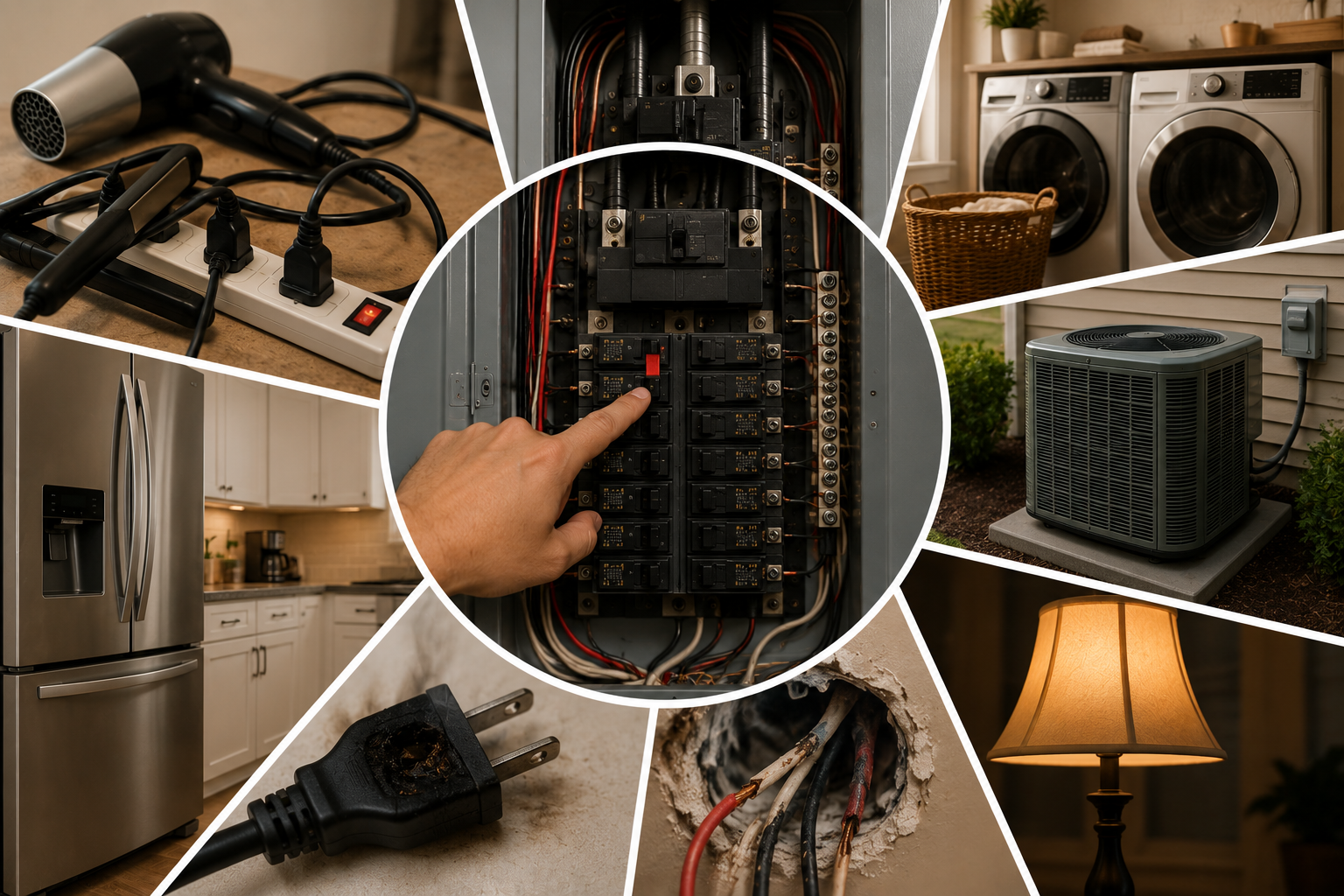
The most common reason a circuit breaker keeps tripping is an overloaded electrical circuit. Every circuit in your home is designed to carry a specific amount of electrical current. When the demand exceeds that limit, the breaker automatically shuts off power to protect the wiring from overheating.
An overloaded circuit usually occurs when too many electrical devices are operating on the same circuit at the same time. Although today’s appliances are more energy efficient than older models, households now use far more electrical equipment than ever before. Home offices, gaming systems, large televisions, portable heaters, kitchen appliances, charging stations, and smart home technology all contribute to increased electrical demand.
For example, imagine using your microwave, coffee maker, toaster, and electric kettle simultaneously while they are connected to outlets served by the same circuit. Each appliance draws electrical current, and together they may exceed the circuit’s capacity. Rather than allowing the wiring to overheat, the breaker trips to prevent damage.
Common situations that overload a circuit include:
Running multiple kitchen appliances at the same time
Using portable electric heaters during winter
Operating window air conditioners on older circuits
Plugging several devices into one extension cord
Connecting multiple high powered tools in a garage or workshop
Charging electric vehicles without sufficient electrical capacity
Using older homes with limited electrical circuits
Although resetting the breaker restores power temporarily, repeatedly doing so does not solve the underlying issue. In fact, frequent overloads place additional stress on both the breaker and your home’s electrical wiring.
Signs that your circuit may be overloaded include:
The breaker trips whenever certain appliances are used together
Lights dim briefly before the breaker shuts off
Outlets feel warm during heavy use
Power interruptions occur during peak electrical demand
Extension cords and power strips are heavily relied upon throughout the home
The safest solution depends on the cause of the overload. In some cases, simply moving appliances to different circuits can reduce the electrical demand. However, if your home consistently exceeds the capacity of its electrical system, a more permanent solution may be necessary.
A licensed residential electrician can evaluate your home’s electrical load, inspect your breaker panel, and determine whether additional dedicated circuits or an electrical panel upgrade is recommended. Homes that were built several decades ago often benefit from upgraded electrical service because they were never designed to support today’s energy intensive lifestyles.
Addressing overloaded circuits not only improves convenience but also reduces the risk of overheated wiring, damaged appliances, and costly electrical repairs. A properly balanced electrical system provides reliable performance while helping protect your family and property from preventable electrical hazards.
2. A Short Circuit Is Causing the Breaker to Trip
Another common reason your circuit breaker keeps tripping is a short circuit. Unlike an overloaded circuit, which occurs when too many devices draw power at the same time, a short circuit happens when electrical current follows an unintended path with little or no resistance. This sudden surge of electricity can generate intense heat in a fraction of a second, making it one of the most dangerous electrical problems a homeowner can experience.
Circuit breakers are specifically designed to detect this unsafe condition. The moment a short circuit occurs, the breaker immediately shuts off power to prevent overheating, electrical fires, and damage to your home’s wiring.
Short circuits can develop for several reasons. Over time, electrical wiring naturally ages, insulation may crack, and connections can loosen. Moisture, rodents, accidental damage during renovations, or defective electrical devices can also create conditions that lead to a short circuit.
Some of the most common causes include:
Damaged electrical wiring
Loose wire connections
Worn insulation around conductors
Faulty outlets or switches
Defective appliances
Water entering electrical components
Improper electrical installations
Nails or screws penetrating hidden wiring inside walls
Although many homeowners simply reset the breaker after it trips, doing so repeatedly without identifying the cause can create a much larger safety risk. If the short circuit remains unresolved, the breaker will continue to trip because it is preventing electricity from flowing through a dangerous fault.
There are several warning signs that may indicate a short circuit rather than a simple overload.
You notice a burning smell near an outlet.
The breaker trips immediately after being reset.
Sparks appear when plugging in an appliance.
Outlets or switches become discolored.
Buzzing sounds come from outlets or the electrical panel.
Smoke appears near electrical fixtures.
An appliance causes the same breaker to trip every time it is used.
One useful way to identify the source is to unplug every device connected to the affected circuit. After unplugging everything, reset the breaker. If the breaker remains on, plug each device back in one at a time until the breaker trips again. This process may help identify a faulty appliance.
However, if the breaker trips even when nothing is connected, the problem is more likely inside the wiring, electrical panel, outlet, or switch. This type of issue requires professional electrical troubleshooting.
Attempting to repair damaged wiring without proper training can expose you to dangerous electrical shock and may violate local electrical codes. A licensed electrician has specialized testing equipment that can safely locate hidden faults inside walls, ceilings, and electrical circuits without unnecessary damage to your home.
Professional electrical troubleshooting typically includes:
Testing circuit continuity
Inspecting outlets and switches
Checking breaker performance
Examining electrical wiring
Inspecting junction boxes
Evaluating grounding connections
Identifying damaged insulation
Verifying code compliance
Once the source of the short circuit is identified, the damaged component can be repaired or replaced before it creates additional safety concerns.
Modern electrical systems are designed with multiple layers of protection, but they depend on properly functioning breakers and wiring. Ignoring repeated breaker trips caused by a short circuit can eventually result in expensive repairs that could have been prevented through early inspection.
For homeowners in Tolland, Connecticut, scheduling a professional electrical inspection as soon as short circuit symptoms appear is the safest way to protect your home and your family.
3. A Ground Fault May Be Creating a Safety Hazard
Ground faults are another common reason a circuit breaker repeatedly trips, particularly in areas where electricity and moisture are present. Kitchens, bathrooms, laundry rooms, garages, unfinished basements, outdoor outlets, and utility rooms are the locations where ground faults occur most frequently.
A ground fault happens when electrical current leaves its intended path and travels directly to the ground through a conductive material. This may occur because of damaged insulation, faulty wiring, defective appliances, or water contacting energized electrical components.
Since electricity always seeks the easiest path to the ground, a ground fault can create a serious shock hazard for anyone who comes into contact with the affected equipment.
Fortunately, modern electrical systems include protective devices that detect ground faults almost instantly. When a ground fault occurs, the breaker or a Ground Fault Circuit Interrupter, commonly known as a GFCI, disconnects power before a serious injury can occur.
Ground faults commonly develop because of:
Damaged appliance cords
Moisture inside electrical boxes
Outdoor weather exposure
Aging electrical wiring
Loose electrical connections
Water damaged outlets
Defective power tools
Faulty kitchen or bathroom appliances
Many homeowners first notice a ground fault when a GFCI outlet constantly resets or refuses to stay on. Others experience repeated breaker trips whenever a particular appliance is plugged into an outlet.
Common warning signs include:
The breaker trips when using one appliance.
Bathroom or kitchen outlets stop working.
Outdoor outlets lose power after rain.
You feel a mild tingling sensation when touching an appliance.
GFCI outlets will not reset.
Electrical outlets show signs of moisture damage.
Ignoring these symptoms places both people and property at risk. Even a minor ground fault can become more dangerous over time if moisture continues to enter the electrical system or damaged wiring is left unrepaired.
A licensed electrician uses advanced testing equipment to locate the exact source of the ground fault without unnecessary guesswork. During the inspection, they examine outlet wiring, circuit protection devices, grounding conductors, electrical panels, and connected appliances to determine where the electrical current is escaping.
After identifying the problem, the electrician may recommend replacing damaged wiring, installing new GFCI protection, repairing defective outlets, or upgrading older electrical components that no longer meet modern safety standards.
Preventing ground faults begins with regular electrical maintenance. Homeowners should avoid using damaged extension cords, replace cracked outlets promptly, keep outdoor electrical equipment protected from moisture, and schedule periodic electrical inspections, especially in older homes.
If your breaker continues tripping around kitchens, bathrooms, garages, or outdoor electrical circuits, do not assume it is a minor inconvenience. Ground faults are safety devices doing exactly what they were designed to do. They are warning you that an electrical hazard exists and should be addressed before it leads to injury or property damage.
Taking quick action not only restores reliable power but also helps ensure your home’s electrical system remains safe, efficient, and compliant with current electrical standards.
4. A Faulty Appliance May Be Triggering the Breaker
Not every circuit breaker problem starts inside your electrical panel. In many cases, the breaker is reacting to a faulty appliance that is drawing more electricity than it should or creating an unsafe electrical condition. This is actually a positive sign because it means your breaker is doing its job by disconnecting power before the problem becomes more serious.
Household appliances experience wear and tear over time. Internal wiring can deteriorate, motors can overheat, insulation can break down, and electrical components can fail after years of regular use. When this happens, the appliance may begin drawing excessive current or create an internal fault that immediately causes the circuit breaker to trip.
Some appliances are more likely to develop electrical faults because they consume a significant amount of power every day.
Common examples include:
Refrigerators
Microwave ovens
Dishwashers
Electric ovens
Clothes dryers
Washing machines
Air conditioning units
Portable space heaters
Electric water heaters
Power tools
Window air conditioners
Electric vehicle charging equipment
If your circuit breaker trips only when one specific appliance is turned on, that appliance should be considered the primary suspect until it has been tested.
For example, imagine your kitchen breaker trips every time you use the microwave, but operates normally throughout the rest of the day. This pattern suggests that either the microwave is defective or the circuit supplying it is experiencing an electrical problem.
Similarly, if your air conditioner repeatedly causes the breaker to trip during hot weather, the issue could involve the compressor, capacitor, motor, wiring, or even an undersized electrical circuit.
Homeowners can perform a simple observation test before calling an electrician.
Turn the breaker off.
Unplug every appliance connected to that circuit.
Reset the breaker.
Reconnect each appliance individually.
Monitor whether one appliance consistently causes the breaker to trip.
If one device repeatedly causes the interruption, discontinue using it until it has been inspected or repaired.
However, it is important not to assume every appliance related breaker trip is caused by the appliance itself. Sometimes the circuit serving that appliance no longer has sufficient electrical capacity, particularly in older homes where modern appliances consume far more electricity than the original electrical system was designed to handle.
Additional warning signs of appliance related electrical problems include:
Appliances becoming unusually hot during operation
Burning odors
Buzzing sounds
Visible sparks
Lights dimming when the appliance starts
Extension cords becoming warm
Power cords showing cracks or damage
Electrical shocks when touching metal surfaces
Ignoring these symptoms can shorten the lifespan of expensive appliances while increasing the likelihood of damaged wiring and electrical fires.
A licensed electrician can determine whether the problem originates inside the appliance, within the electrical circuit, or at the electrical panel itself. Professional testing eliminates guesswork and ensures the correct repair is performed the first time.
If your home frequently adds new appliances, a complete electrical load calculation may reveal that your electrical system needs additional dedicated circuits or a service panel upgrade to safely support today’s electrical demands.
5. Your Electrical Panel May Be Outdated or Failing
If your circuit breaker keeps tripping even after electrical loads have been reduced and appliances appear to be functioning correctly, the problem may be your electrical panel itself.
Electrical panels are not designed to last forever. Like every major component in a home, they experience gradual wear over time. Breakers cycle on and off thousands of times during their lifespan. Electrical connections naturally loosen due to repeated heating and cooling. Moisture, dust, corrosion, and aging components slowly reduce the panel’s reliability.
Many homes throughout Connecticut still operate with electrical panels installed twenty five to forty years ago. Although these systems may still function, they often struggle to meet the electrical demands of modern households.
Today’s homes regularly power:
Smart home systems
Large televisions
Gaming equipment
Home offices
High efficiency HVAC systems
Electric ranges
Tankless water heaters
Security systems
Electric vehicle chargers
Whole home generators
Solar energy equipment
Battery backup systems
Each new addition increases the electrical demand placed on your breaker panel.
An older panel may not provide enough circuit space, electrical capacity, or modern safety protection to handle these requirements safely.
Several warning signs suggest your electrical panel may be approaching the end of its service life.
Circuit breakers trip more frequently than they used to.
Breakers refuse to reset.
The panel feels warm during normal operation.
Buzzing or crackling sounds come from inside the panel.
Rust or corrosion is visible.
Burn marks appear around breakers.
Lights flicker throughout multiple rooms.
The panel still contains fuses instead of modern circuit breakers.
There is no available space for additional circuits.
These symptoms often indicate that internal components have deteriorated or that the electrical panel is operating beyond its intended capacity.
Continuing to rely on an outdated electrical panel creates unnecessary risks. In addition to increasing the likelihood of electrical failures, an aging panel can reduce the overall reliability of your home’s electrical system and make future upgrades much more difficult.
Replacing an outdated electrical panel provides several long term advantages.
Greater electrical capacity
Improved circuit protection
Better compatibility with modern appliances
Reliable support for home renovations
Preparation for EV charger installation
Preparation for standby generators
Compliance with current electrical codes
Improved electrical safety
Increased property value
Reduced maintenance costs
A professional electrical inspection can determine whether your existing panel is still operating safely or whether replacing it would provide better long term performance.
For homeowners planning kitchen renovations, home additions, basement finishing projects, or major appliance upgrades, replacing an aging electrical panel before construction begins often saves both time and money.
Working with a licensed electrical contractor also ensures that every breaker, circuit, grounding connection, and service upgrade complies with current industry standards. This provides confidence that your electrical system is capable of supporting your family’s needs today while remaining prepared for future technology and increased electrical demand.
Rather than viewing an electrical panel upgrade as simply another home improvement project, it should be considered an investment in safety, reliability, efficiency, and peace of mind. A modern electrical panel serves as the foundation of a dependable electrical system and helps protect every device connected to your home.
Conclusion
A circuit breaker is one of the most important safety components in your home’s electrical system. Every time it trips, it is responding to a potential problem that could damage your electrical wiring, your appliances, or even put your family at risk. While it may be tempting to simply reset the breaker and continue with your day, repeated trips should never be treated as a normal occurrence.
Understanding why your circuit breaker keeps tripping is the first step toward maintaining a safe and reliable electrical system. In many cases, the cause is an overloaded circuit that is being asked to power more devices than it was designed to handle. In other situations, the issue may be a short circuit, a ground fault, a faulty appliance, or an aging electrical panel that can no longer support the demands of a modern home.
Addressing these issues early offers several long term benefits. It helps protect your electrical wiring from overheating, reduces the likelihood of electrical fires, extends the lifespan of expensive appliances, and minimizes the risk of unexpected power outages. More importantly, it provides peace of mind knowing that your home’s electrical system is operating safely and efficiently.
As homeowners continue adding larger appliances, smart home technology, electric vehicle chargers, and backup power systems, the demand placed on residential electrical systems continues to increase. What worked well twenty years ago may no longer provide the capacity or protection your home requires today.
If your breaker trips repeatedly, your lights dim when appliances start, or you have noticed buzzing sounds, burning odors, or warm outlets, do not ignore these warning signs. A professional electrical inspection can identify the root cause before it develops into a more expensive repair or a serious safety hazard.
Whether the solution is replacing a faulty outlet, installing a dedicated circuit, repairing damaged wiring, or upgrading your electrical panel, taking action now is always safer and more cost effective than waiting for a complete electrical failure.
For homeowners and businesses in Tolland, Connecticut, investing in professional electrical troubleshooting ensures that every component of your electrical system meets current safety standards and is prepared to support your property’s growing electrical needs.
A dependable electrical system is something you rely on every day. Keeping it in excellent condition protects your home, improves efficiency, and helps ensure uninterrupted power for years to come.
Frequently Asked Questions
Is it safe to keep resetting a circuit breaker?
Resetting a breaker once after identifying the cause is generally safe. However, if the breaker continues to trip, repeatedly resetting it without addressing the underlying problem can increase safety risks and should be avoided.
What is the most common reason a circuit breaker trips?
The most common cause is an overloaded circuit. This happens when too many electrical devices or high power appliances are operating on the same circuit, causing the breaker to shut off power to prevent overheating.
Can a bad appliance trip a circuit breaker?
Yes. Appliances with damaged wiring, failing motors, or internal electrical faults can draw excessive current and repeatedly trip the breaker. Disconnecting the appliance and having it inspected is recommended.
How do I know if my electrical panel is too old?
Frequent breaker trips, flickering lights, buzzing sounds, rust, warm breakers, limited circuit space, or a fuse box instead of modern breakers are all signs that your electrical panel may need to be replaced.
Can an overloaded power strip cause a breaker to trip?
Yes. Plugging multiple high power devices into the same power strip can overload the circuit supplying that outlet, causing the breaker to trip as a safety measure.
When should I call a licensed electrician?
You should contact a licensed electrician if your breaker trips repeatedly, refuses to reset, you notice burning smells, hear buzzing sounds, see sparks, or experience frequent electrical problems throughout your home.
Does installing an EV charger require an electrical panel upgrade?
Not every home requires one, but many older electrical panels do not have enough available capacity for a Level 2 EV charger. A professional electrical load calculation can determine whether your existing panel is sufficient.
Can regular electrical inspections prevent breaker problems?
Yes. Routine electrical inspections help identify loose connections, aging breakers, damaged wiring, overloaded circuits, and other issues before they become major safety concerns.
Call to Action
If your circuit breaker keeps tripping, do not ignore the warning signs. What may seem like a minor inconvenience today could indicate a more serious electrical issue that requires professional attention.
CODAN Electric provides trusted residential and commercial electrical services throughout Tolland, Connecticut. Our experienced electricians specialize in electrical troubleshooting, circuit breaker repairs, electrical panel upgrades, EV charger installation, generator installation, electrical safety inspections, and complete electrical system upgrades.
Whether you need to diagnose a recurring electrical problem or modernize your home’s electrical system, our team is committed to delivering safe, code compliant, and dependable solutions tailored to your property’s needs.
Contact CODAN Electric today to schedule a professional electrical inspection and let our experts help restore the safety, reliability, and performance of your electrical system.
Call to Action
If your home is showing any of these warning signs, do not wait until a minor electrical issue becomes a major safety hazard. A professional inspection can identify potential risks before they lead to costly repairs or unexpected power failures.
CODAN Electric provides dependable residential and commercial electrical services, including electrical panel upgrades, electrical troubleshooting, generator installation, EV charger installation, and complete electrical safety inspections. Whether you are upgrading an older home or preparing for future electrical needs, our experienced team is committed to delivering safe, code compliant, and reliable solutions tailored to your property.
Contact CODAN Electric today to schedule your electrical inspection and discover how a modern electrical panel can improve the safety, performance, and value of your home.