




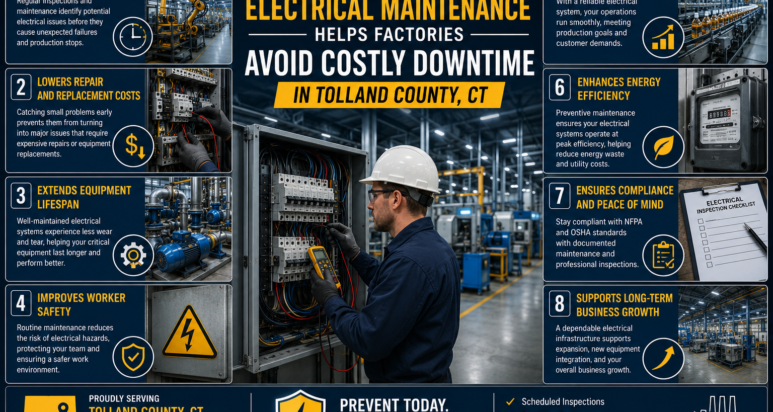

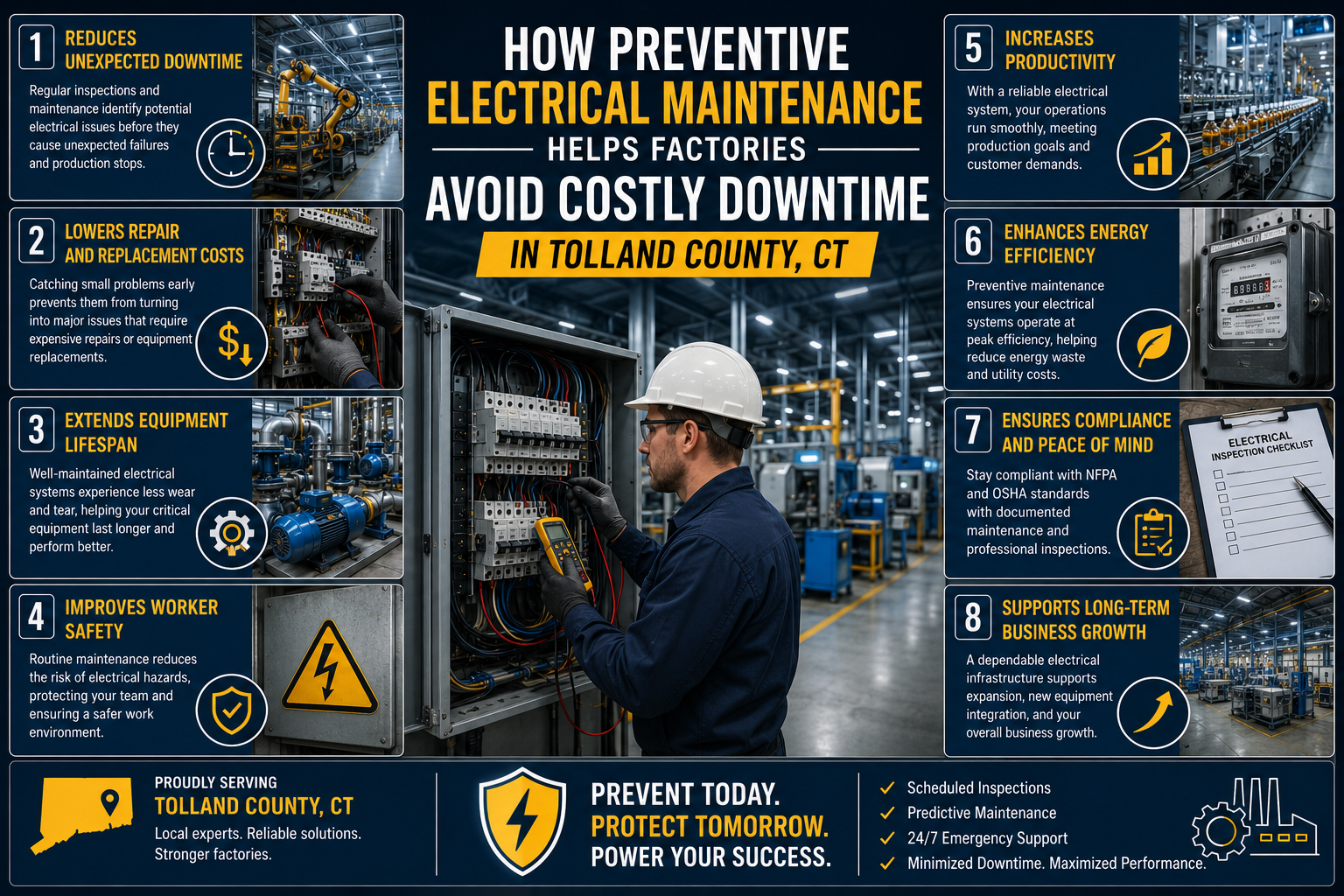
Preventive Electrical Maintenance Tolland County CT helps manufacturing facilities reduce unexpected equipment failures, avoid costly downtime, and maintain safe, reliable electrical systems.
For manufacturing facilities, production plants, warehouses, and industrial operations, every minute of downtime has a cost. A single electrical failure can stop production lines, delay customer orders, reduce employee productivity, damage expensive equipment, and impact your company’s bottom line. Whether you operate a small manufacturing shop or a large industrial facility, maintaining a reliable electrical system is essential to keeping your business running efficiently.
Many factory owners focus on repairing equipment only after a problem occurs. While emergency repairs may restore operations temporarily, this reactive approach often leads to higher repair costs, unexpected shutdowns, and avoidable production losses. Preventive electrical maintenance offers a smarter solution by identifying potential issues before they become major failures.
At CODAN Electric LLC, we help manufacturing facilities and industrial businesses reduce unexpected downtime through professional electrical maintenance services. Our team works with factories, warehouses, and commercial facilities across Tolland, Ellington, Vernon, Willington, East Windsor, Windsor, Enfield, Ashford, Somers, Coventry, Stafford Springs, and Manchester, CT, providing proactive electrical solutions that improve reliability, safety, and operational efficiency.
In this guide, we’ll explain why preventive electrical maintenance is one of the best investments a factory owner can make, the common electrical issues that lead to production downtime, and how regular inspections can help protect your equipment, employees, and business operations.
Why Electrical Downtime Is So Expensive for Manufacturers
Unlike a typical office environment, manufacturing facilities depend on continuous electrical power to operate machinery, automation systems, conveyors, compressors, HVAC equipment, lighting, and production lines. Even a short interruption can create a ripple effect that impacts every stage of the manufacturing process.
When electrical systems fail unexpectedly, the consequences often include:
- Lost production time
- Missed customer deadlines
- Damaged raw materials
- Equipment repair costs
- Employee downtime
- Shipping delays
- Emergency service expenses
- Reduced customer satisfaction
For businesses operating on tight production schedules, these interruptions can quickly become far more expensive than the cost of routine maintenance.
Preventive electrical maintenance minimizes these risks by identifying worn components, overloaded circuits, loose electrical connections, and other hidden issues before they result in equipment failure or unplanned shutdowns.
What Is Preventive Electrical Maintenance?
Preventive electrical maintenance is the process of regularly inspecting, testing, servicing, and maintaining electrical systems to keep them operating safely and efficiently. Instead of waiting for equipment to fail, scheduled maintenance helps identify potential problems early, allowing repairs to be completed during planned maintenance windows rather than during costly production stoppages.
A comprehensive preventive maintenance program may include:
- Electrical panel inspections
- Circuit testing
- Thermal imaging inspections
- Tightening electrical connections
- Breaker testing
- Switchgear inspections
- Motor control inspections
- Equipment wiring evaluations
- Power distribution testing
- Surge protection assessments
- Emergency backup power testing
The goal is simple: detect small issues before they become major operational problems.
For factories running multiple shifts or operating around the clock, this proactive approach can significantly improve equipment reliability and reduce the likelihood of unexpected downtime.
Common Electrical Problems That Cause Factory Downtime
Many production interruptions don’t happen without warning. In fact, most electrical failures develop gradually over time, showing subtle signs long before equipment stops working.
Recognizing these early warning signs allows maintenance teams to take corrective action before operations are affected.
Some of the most common electrical issues found in industrial facilities include:
Loose Electrical Connections
Constant vibration from heavy machinery can gradually loosen electrical terminals and connections. Loose connections create resistance, generate excessive heat, and may eventually cause equipment failure or electrical fires if left unresolved.
Overloaded Electrical Circuits
As production facilities expand, additional machinery is often added to existing electrical systems. Without proper load calculations, circuits may become overloaded, increasing the likelihood of breaker trips and production interruptions.
Aging Electrical Panels
Older electrical panels may no longer provide the capacity required for modern manufacturing equipment. An overloaded or outdated panel can affect the performance of the entire facility and limit future expansion.
Worn Circuit Breakers
Circuit breakers experience wear after years of continuous operation. A breaker that fails to trip properly during an electrical fault can place expensive machinery and employee safety at risk.
Damaged Wiring
Industrial environments expose wiring to heat, vibration, dust, moisture, and mechanical stress. Over time, insulation can deteriorate, increasing the risk of short circuits and equipment failures.
The Business Benefits of Preventive Maintenance
Preventive maintenance isn’t just about avoiding breakdowns,it’s about improving overall business performance. A well-maintained electrical system contributes to greater productivity, lower operating costs, and a safer workplace.
Some of the key benefits include:
Reduced Unplanned Downtime
Unexpected shutdowns are one of the biggest threats to manufacturing productivity. Routine inspections help identify potential failures before they interrupt production, allowing repairs to be scheduled at convenient times.
Longer Equipment Lifespan
Electrical equipment operates more efficiently when components are clean, secure, and functioning correctly. Preventive maintenance reduces unnecessary wear, helping motors, panels, breakers, and other equipment last longer.
Improved Workplace Safety
Faulty electrical systems can expose employees to serious hazards, including electric shock, arc flashes, and fire risks. Regular inspections help identify unsafe conditions and ensure your facility remains compliant with current electrical safety standards.
Lower Repair Costs
Small electrical issues are generally less expensive to repair than major equipment failures. Detecting problems early helps avoid emergency service calls, extensive repairs, and costly equipment replacement.
Electrical reliability is the foundation of every successful manufacturing operation. By investing in preventive maintenance, factory owners can reduce risk, improve efficiency, and create a safer working environment while protecting valuable equipment and minimizing costly downtime.
In the next section, we’ll explore the critical components that should be included in every factory’s preventive electrical maintenance program and explain how scheduled inspections help manufacturing facilities operate at peak performance throughout the year.
What Should Be Included in a Factory’s Preventive Electrical Maintenance Program?
Every manufacturing facility has different equipment, production schedules, and electrical demands. A small fabrication shop has very different requirements than a large warehouse or automated production plant. That’s why preventive electrical maintenance should never follow a one-size-fits-all approach.
A professional maintenance program is designed around your facility’s electrical infrastructure, critical equipment, and operational goals. By inspecting and servicing key electrical components on a regular schedule, businesses can identify developing problems before they interrupt production.
At CODAN Electric LLC, every maintenance plan begins with a thorough assessment of the facility to determine which systems require routine inspection and how often they should be serviced.
A complete preventive maintenance program typically includes the following:
Electrical Panel Inspections
Electrical panels distribute power throughout your facility, making them one of the most important components of your electrical system.
During an inspection, electricians check for:
- Loose electrical connections
- Overheated breakers
- Signs of corrosion
- Damaged bus bars
- Moisture intrusion
- Improper labeling
- Physical damage
Routine panel inspections help identify issues that could eventually lead to equipment failure or production downtime.
Circuit Breaker Testing
Circuit breakers are designed to protect both equipment and employees by disconnecting power during electrical faults.
Over time, breakers experience wear from repeated operation.
Preventive testing helps verify that breakers:
- Trip correctly
- Reset properly
- Carry the appropriate electrical load
- Show no signs of overheating
- Continue operating according to manufacturer specifications
Replacing a worn breaker before it fails is far less expensive than repairing damaged production equipment.
Equipment Wiring Inspections
Manufacturing environments place significant stress on electrical wiring.
Heavy equipment vibration, temperature changes, dust, moisture, and continuous operation can gradually affect wiring integrity.
Routine inspections help identify:
- Damaged insulation
- Loose terminals
- Frayed conductors
- Improper cable support
- Signs of overheating
- Physical wear
Correcting these issues early improves both reliability and workplace safety.
Power Distribution System Evaluation
As production grows, many facilities add new machinery without fully evaluating their electrical capacity.
Preventive maintenance includes reviewing the facility’s power distribution system to ensure electrical loads remain balanced and equipment receives stable power.
Electricians may evaluate:
- Distribution panels
- Transformers
- Disconnect switches
- Feeders
- Branch circuits
- Load distribution
Balanced electrical systems improve efficiency while reducing unnecessary stress on equipment.
How Preventive Maintenance Improves Productivity
Many business owners think of electrical maintenance as an expense.
In reality, it’s an investment in operational reliability.
When electrical systems operate efficiently, production lines remain active, equipment performs consistently, and employees spend less time dealing with unexpected shutdowns.
Reliable electrical systems allow manufacturers to:
- Meet production schedules
- Deliver orders on time
- Improve customer satisfaction
- Reduce overtime caused by equipment failures
- Increase equipment availability
- Improve workflow efficiency
For facilities operating multiple shifts, even preventing one unexpected shutdown each year can save thousands of dollars in lost production.
Protecting Expensive Industrial Equipment
Modern manufacturing equipment represents a significant investment.
Whether your facility operates CNC machines, conveyors, robotic systems, packaging equipment, compressors, or automated production lines, every machine depends on stable electrical power.
Electrical problems can damage:
- Variable frequency drives (VFDs)
- PLC control systems
- Industrial motors
- Sensors
- Automation equipment
- Production computers
- HVAC control systems
- Conveyor systems
Replacing or repairing these components is often far more expensive than performing routine preventive maintenance.
By identifying voltage irregularities, loose wiring, overloaded circuits, and deteriorating components early, businesses reduce unnecessary wear on critical equipment.
Electrical Safety Protects Your Employees
A safe workplace benefits everyone.
Electrical hazards not only threaten equipment but also place employees at risk.
Some of the most common industrial electrical hazards include:
- Arc flash incidents
- Electric shock
- Equipment overheating
- Exposed conductors
- Faulty disconnect switches
- Damaged extension cords
- Improper grounding
Routine inspections help identify and correct these hazards before accidents occur.
Maintaining a safe electrical system also demonstrates a company’s commitment to employee well-being and helps create a more productive working environment.
Why Scheduled Maintenance Is Better Than Emergency Repairs
Many facilities continue operating until something breaks.
While this approach may seem like it saves money, emergency repairs often create far greater costs than scheduled maintenance.
Emergency electrical failures frequently result in:
- Unplanned production stoppages
- Rush repair charges
- Equipment replacement
- Lost inventory
- Missed delivery deadlines
- Employee downtime
- Customer dissatisfaction
Preventive maintenance allows repairs to be scheduled during planned shutdowns or non-production hours, minimizing disruption to daily operations.
Instead of reacting to failures, businesses remain in control of their maintenance schedule.
Industries That Benefit from Preventive Electrical Maintenance
Preventive electrical maintenance isn’t limited to large manufacturing plants.
Facilities of all sizes benefit from proactive electrical care.
CODAN Electric LLC works with businesses including:
- Manufacturing facilities
- Warehouses
- Distribution centers
- Food processing facilities
- Machine shops
- Automotive manufacturing
- Printing facilities
- Packaging companies
- Fabrication shops
- Commercial production plants
Whether your business is located in Tolland, Ellington, Vernon, Willington, East Windsor, Windsor, Enfield, Ashford, Somers, Coventry, Stafford Springs, or Manchester, CT, routine electrical maintenance helps reduce downtime, improve equipment reliability, and support long-term business growth.
A well-planned preventive maintenance program is one of the most effective ways to protect your facility from unexpected electrical failures. By inspecting key components, testing critical systems, and addressing small issues before they escalate, factory owners can improve productivity, extend equipment life, and avoid costly interruptions.
In the next section, we’ll discuss the warning signs that your facility may already need professional electrical maintenance and explain how partnering with an experienced industrial electrician helps keep your operations running safely and efficiently.
Warning Signs Your Factory Needs Preventive Electrical Maintenance
Electrical systems rarely fail without warning. In most cases, there are clear signs that something isn’t working as it should. The challenge is that these warning signs are often overlooked because production continues, even if equipment isn’t operating at peak performance.
Waiting until a complete system failure occurs can result in unplanned downtime, expensive emergency repairs, and unnecessary disruptions to your business. Recognizing these warning signs early allows factory owners and facility managers to schedule maintenance before a small issue turns into a major problem.
Here are some of the most common indicators that your facility should schedule a professional electrical inspection.
Frequent Circuit Breaker Trips
Circuit breakers are designed to protect your electrical system from overloads and short circuits. If breakers are tripping regularly, it’s a sign that something requires attention.
Common causes include:
- Overloaded circuits
- Faulty machinery
- Damaged wiring
- Aging electrical panels
- Loose electrical connections
Repeatedly resetting a breaker without investigating the cause only masks the problem and can lead to more serious issues over time.
Lights That Flicker or Dim
Lighting problems inside a manufacturing facility should never be ignored.
If overhead lighting flickers or dims when machinery starts, it may indicate:
- Voltage fluctuations
- Overloaded circuits
- Loose wiring
- Power distribution issues
- Electrical panel capacity limitations
In addition to affecting employee productivity and workplace safety, inconsistent lighting may signal larger electrical concerns that need immediate attention.
Equipment Running Hot
Industrial equipment naturally generates heat during operation, but excessive heat is often a warning sign of electrical problems.
Electricians commonly investigate overheating caused by:
- Loose terminals
- Overloaded circuits
- Worn electrical components
- Poor ventilation around electrical equipment
- Improperly sized conductors
Routine maintenance helps identify these issues before they damage expensive machinery or interrupt production.
Burning Smells or Unusual Noises
A burning odor coming from an electrical panel, motor control center, outlet, or disconnect switch should always be treated as an emergency.
Similarly, buzzing, humming, or crackling sounds often indicate electrical arcing or loose connections.
These warning signs should never be ignored because they can increase the risk of equipment failure and electrical fires.
How Preventive Maintenance Supports Business Growth
Reliable electrical systems do more than keep machines running,they support long-term business growth.
As manufacturing operations expand, electrical demand typically increases. Businesses add production lines, automation equipment, robotics, climate control systems, and new machinery to meet customer demand.
Without routine maintenance, existing electrical infrastructure may struggle to support these growing operational requirements.
Preventive maintenance helps businesses scale confidently by ensuring electrical systems remain dependable and capable of supporting future expansion.
Some long-term business benefits include:
- Greater operational reliability
- Improved production efficiency
- Reduced equipment downtime
- Better budget planning
- Increased employee productivity
- Longer equipment lifespan
- Improved customer satisfaction
Rather than constantly responding to unexpected breakdowns, factory owners can focus on growing their business.
The Value of Thermal Imaging Inspections
One of the most effective tools used during preventive electrical maintenance is thermal imaging.
Infrared cameras allow electricians to detect heat that cannot be seen with the naked eye.
Because excessive heat is often the first sign of an electrical problem, thermal imaging helps identify hidden issues before they become critical failures.
Thermal inspections can detect:
- Overloaded breakers
- Loose electrical connections
- Hot spots inside electrical panels
- Failing switches
- Transformer issues
- Motor control problems
- Uneven electrical loads
Since these inspections are performed without dismantling equipment, they provide valuable information while minimizing disruption to daily operations.
For facilities that depend on continuous production, thermal imaging is an excellent preventive maintenance tool.
Why Partner With an Experienced Industrial Electrician?
Industrial electrical systems are significantly more complex than residential electrical systems. Manufacturing facilities often rely on high-voltage equipment, three-phase power, motor controls, automation systems, and specialized machinery that require experienced electrical professionals.
Choosing an electrician with industrial experience ensures your facility receives accurate diagnostics, practical recommendations, and solutions designed specifically for commercial and manufacturing environments.
At CODAN Electric LLC, we understand the importance of keeping your business operating safely and efficiently. Our licensed electricians work closely with facility owners, maintenance managers, and operations teams to develop preventive maintenance strategies that reduce downtime and improve system reliability.
We proudly serve manufacturing facilities, warehouses, and industrial businesses throughout:
- Tolland
- Ellington
- Vernon
- Willington
- East Windsor
- Windsor
- Enfield
- Ashford
- Somers
- Coventry
- Stafford Springs
- Manchester
Our industrial electrical services include:
- Preventive electrical maintenance
- Electrical troubleshooting
- Panel upgrades
- Equipment wiring
- Power distribution systems
- Surge protection
- Generator installations
- Electrical safety inspections
- Emergency electrical repairs
- Industrial lighting solutions
Whether your facility operates one production line or multiple manufacturing processes, our team provides dependable electrical solutions that help keep your business moving.
Building a Long-Term Maintenance Strategy
The most successful manufacturers don’t wait for equipment to fail,they plan ahead.
A long-term preventive maintenance strategy allows businesses to schedule inspections, prioritize repairs, and budget for future upgrades without disrupting production.
Instead of dealing with unexpected electrical emergencies, factory owners gain greater control over maintenance costs and operational planning.
By working with a trusted electrical contractor, facilities can establish maintenance schedules based on:
- Equipment usage
- Production hours
- Facility size
- Electrical load demands
- Manufacturer recommendations
- Business growth plans
This proactive approach creates a safer workplace, improves equipment reliability, and helps businesses remain competitive in today’s demanding manufacturing environment.
Preventive electrical maintenance is one of the smartest investments a manufacturing business can make. Identifying problems early, protecting valuable equipment, and reducing unexpected downtime all contribute to stronger productivity and lower operating costs.
In the final section, we’ll discuss why partnering with CODAN Electric LLC is the right choice for your facility, answer some frequently asked questions, and provide complete SEO metadata for this guide.
Why Choose CODAN Electric LLC for Industrial Electrical Maintenance?
When it comes to manufacturing facilities, warehouses, and industrial operations, experience matters. Electrical systems in commercial environments are far more complex than residential systems and require a proactive approach to ensure maximum reliability and safety.
At CODAN Electric LLC, we understand that every hour of downtime affects productivity, employee efficiency, and profitability. That’s why our focus isn’t just on fixing electrical problems,it’s on helping businesses prevent them before they disrupt operations.
Our licensed electricians work with factory owners, plant managers, maintenance supervisors, and warehouse operators to provide dependable electrical solutions that support uninterrupted production.
Whether you need scheduled maintenance, emergency troubleshooting, electrical upgrades, or system inspections, our goal is to keep your facility operating safely and efficiently.
We proudly provide industrial electrical services throughout:
- Tolland, CT
- Ellington, CT
- Vernon, CT
- Willington, CT
- East Windsor, CT
- Windsor, CT
- Enfield, CT
- Ashford, CT
- Somers, CT
- Coventry, CT
- Stafford Springs, CT
- Manchester, CT
No matter where your facility is located within our service area, our team is committed to delivering reliable workmanship, responsive service, and long-term electrical solutions.
Our Industrial Electrical Services
Preventive maintenance is only one part of keeping a manufacturing facility running efficiently. CODAN Electric LLC offers a complete range of industrial electrical services designed to support businesses of all sizes.
Our services include:
- Preventive electrical maintenance
- Industrial electrical troubleshooting
- Electrical panel upgrades
- Three-phase electrical systems
- Power distribution installation and repairs
- Equipment and machinery wiring
- Motor control wiring
- Emergency electrical repairs
- Whole-facility surge protection
- Backup generator installation
- Industrial lighting installation and upgrades
- Electrical safety inspections
- Dedicated circuit installation
- Facility electrical upgrades
Whether you’re expanding your production line, replacing aging equipment, or improving the reliability of your electrical infrastructure, our experienced electricians deliver solutions tailored to your operational needs.
The Long-Term Value of Preventive Maintenance
Preventive electrical maintenance isn’t simply another line item in your operating budget,it’s an investment in your facility’s long-term success.
Businesses that prioritize regular electrical inspections often experience:
- Fewer unexpected equipment failures
- Reduced production downtime
- Lower emergency repair costs
- Increased equipment lifespan
- Improved employee safety
- Better energy efficiency
- More predictable maintenance expenses
- Greater operational reliability
Instead of reacting to electrical failures, manufacturers can plan maintenance around production schedules, reducing disruption while protecting valuable equipment.
For facilities operating on tight deadlines and demanding production targets, this proactive approach can make a significant difference in overall profitability.
Final Thoughts
Manufacturing facilities depend on reliable electrical systems every day. From powering production equipment and automation systems to supporting lighting, HVAC, and critical infrastructure, electricity plays a vital role in maintaining productivity.
Unfortunately, many electrical failures develop gradually and remain unnoticed until they result in costly downtime. Loose connections, overloaded circuits, aging panels, worn breakers, and damaged wiring may all begin as minor issues but can quickly escalate into major operational disruptions if left unresolved.
Preventive electrical maintenance helps eliminate these risks by identifying potential problems early. Through scheduled inspections, testing, and proactive repairs, businesses can improve equipment reliability, protect employees, extend the life of valuable machinery, and reduce the likelihood of unexpected shutdowns.
Whether you manage a manufacturing plant in Tolland, oversee a warehouse in Ellington, operate a production facility in Vernon, or own an industrial business in Willington, East Windsor, Windsor, Enfield, Ashford, Somers, Coventry, Stafford Springs, or Manchester, investing in routine electrical maintenance is one of the smartest decisions you can make for your business.
By partnering with an experienced industrial electrician, you’re not only protecting your electrical system but also supporting the long-term growth, safety, and success of your operation.
Schedule Preventive Electrical Maintenance with CODAN Electric LLC
Unexpected downtime can affect productivity, increase operating costs, and delay customer deliveries. Don’t wait until an electrical failure disrupts your business.
CODAN Electric LLC provides professional preventive electrical maintenance for factories, warehouses, manufacturing facilities, and industrial businesses throughout Tolland County and the surrounding Connecticut communities.
Whether you need routine inspections, electrical troubleshooting, panel upgrades, or a customized maintenance program, our experienced team is ready to help.
Contact CODAN Electric LLC today to schedule a preventive electrical maintenance consultation and keep your facility operating safely, efficiently, and without unnecessary interruptions.
Frequently Asked Questions
How often should a factory schedule preventive electrical maintenance?
Most manufacturing facilities benefit from professional electrical inspections at least once a year, while high-production environments may require more frequent maintenance.
What are the benefits of preventive electrical maintenance?
It helps reduce downtime, improve equipment reliability, lower repair costs, and enhance workplace safety.
Can preventive maintenance reduce emergency electrical repairs?
Yes. Routine inspections identify developing issues early, allowing repairs to be completed before major failures occur.
Which businesses benefit from preventive electrical maintenance?
Manufacturing plants, warehouses, production facilities, machine shops, and other industrial operations all benefit from scheduled maintenance.
Does CODAN Electric LLC provide industrial electrical services throughout Tolland County?
Yes. We proudly serve businesses in Tolland, Ellington, Vernon, Willington, East Windsor, Windsor, Enfield, Ashford, Somers, Coventry, Stafford Springs, and Manchester, CT.